
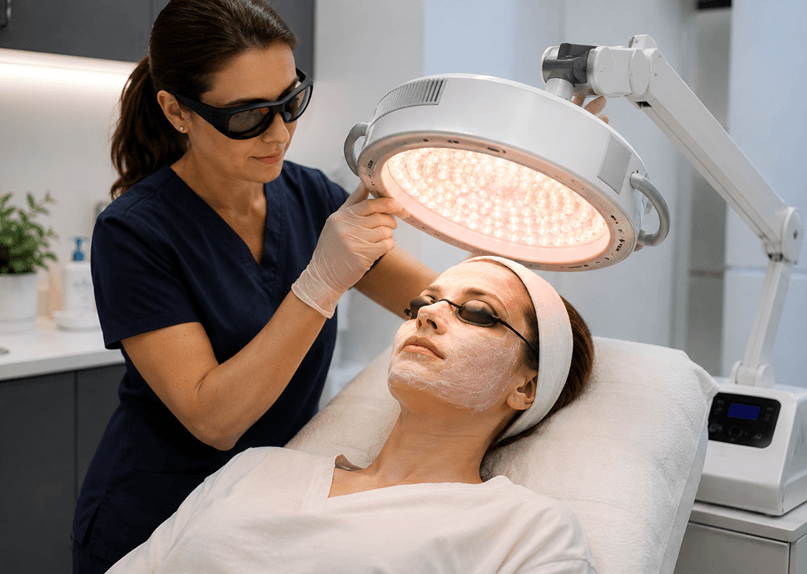
Daylight Photodynamic Therapy: Harnessing the Sun for Treatment
Daylight photodynamic therapy is an effective treatment for precancerous skin lesions caused by long-term sun exposure in Australia. At Pymble Dermatology, this treatment uses a light-sensitive cream and natural daylight to target damaged cells while preserving healthy skin. It is especially helpful for patients with actinic keratoses and wider areas of sun-damaged skin.
How the Treatment Works
Your dermatologist prepares the skin, applies the prescribed cream, and then uses outdoor daylight to activate it. This process destroys abnormal cells in a gentle, controlled way. For many Australians, daylight photodynamic therapy is a practical option because natural daylight is readily available year-round.
Why Patients Choose Daylight PDT
Compared with conventional photodynamic therapy, daylight PDT is often more comfortable during treatment. Patients usually report less pain, less disruption, and a shorter recovery period. That makes it a patient-friendly choice for people who want effective care without the discomfort often associated with indoor light therapy.
A Smart Option for Sun-Damaged Skin
Daylight PDT can treat visible lesions and broader areas of damaged skin simultaneously. This makes it a highly effective option for managing the effects of Australia’s harsh sun. With expert care, it can support healthier skin and ongoing prevention.
Speak With Pymble Dermatology
If you are considering treatment for sun-damaged skin, contact Pymble Dermatology to learn whether daylight PDT is right for you.
Frequently Asked Questions
1. What are the disadvantages of photodynamic therapy?
Photodynamic therapy may cause temporary redness, swelling, stinging, or peeling in treated areas. Some patients may also experience increased sensitivity to light for a short period after treatment.
2. How long do PDT results last?
Results vary depending on the condition treated and individual skin factors. Some patients may require follow-up treatment or ongoing monitoring.
3. How long do you need to avoid sunlight after PDT?
Patients are usually advised to avoid direct sunlight for a period recommended by their dermatologist to reduce the risk of skin irritation during recovery.


